Wayfinding Projects in Practice

Examining how strategic advisory transforms navigation challenges into intuitive experiences across diverse facility types.

Multi-Tenant Office Complex

Addressing navigation complexity in a twelve-story office building with frequent tenant turnover.
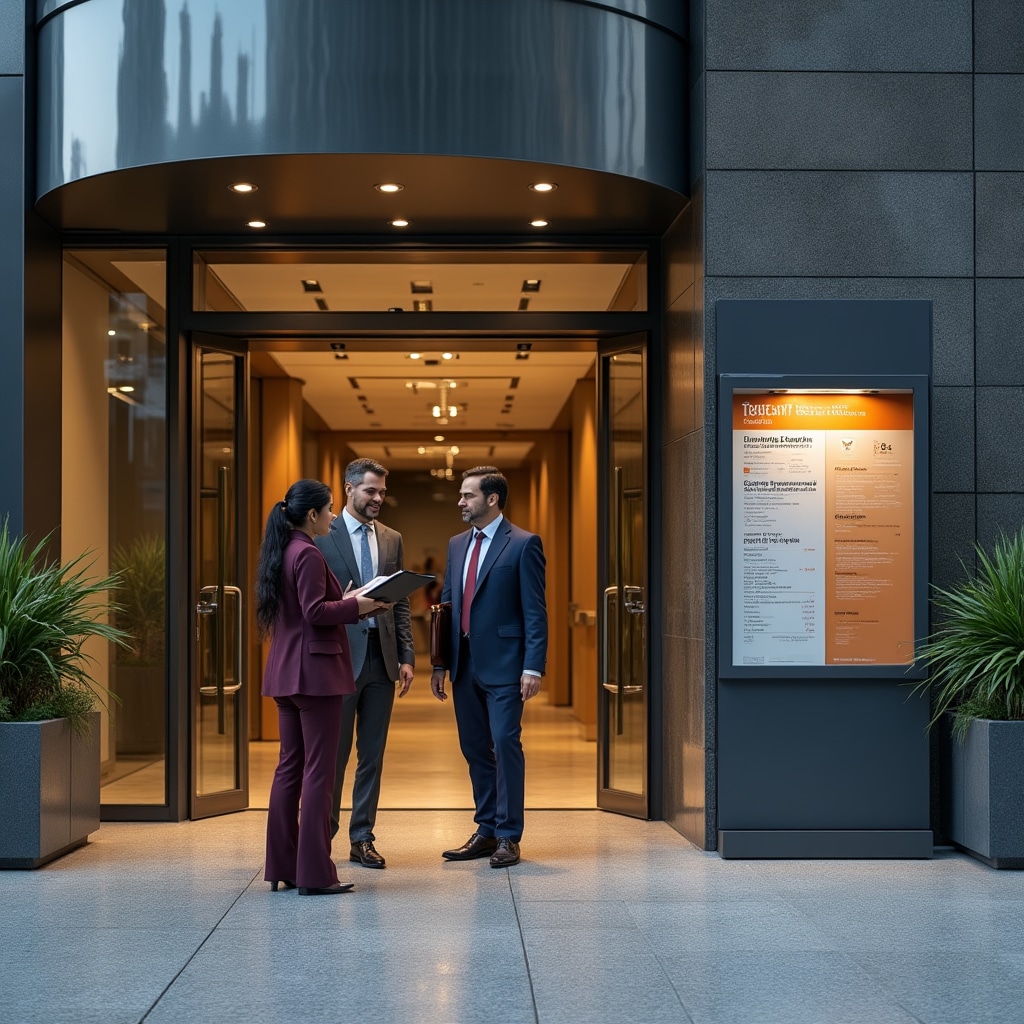
Modern office building entrance with clear directional signage and tenant directory in multilingual format

Challenge Context

The facility experienced consistent visitor confusion due to multiple entry points, complex floor layouts, and frequent tenant relocations. Existing signage provided inconsistent information and lacked clear hierarchy, resulting in reception desk congestion and delayed meetings.

Advisory Approach

We conducted comprehensive circulation analysis identifying three primary entry sequences and mapping typical visitor journeys. Our recommendations established a modular signage framework allowing easy updates as tenants changed, implemented consistent floor numbering visible from all elevators, and created a three-tier information hierarchy distinguishing building navigation from tenant identification.

Implementation Outcomes

The flexible system accommodated tenant changes through simple panel replacements rather than complete sign reconstruction. Clear decision-point signage reduced reception inquiries, while multilingual directory displays served the building's international tenant population effectively.
Industrial Manufacturing Campus

Developing wayfinding that serves both pedestrian and vehicle traffic across a sprawling production facility.

Challenge Context

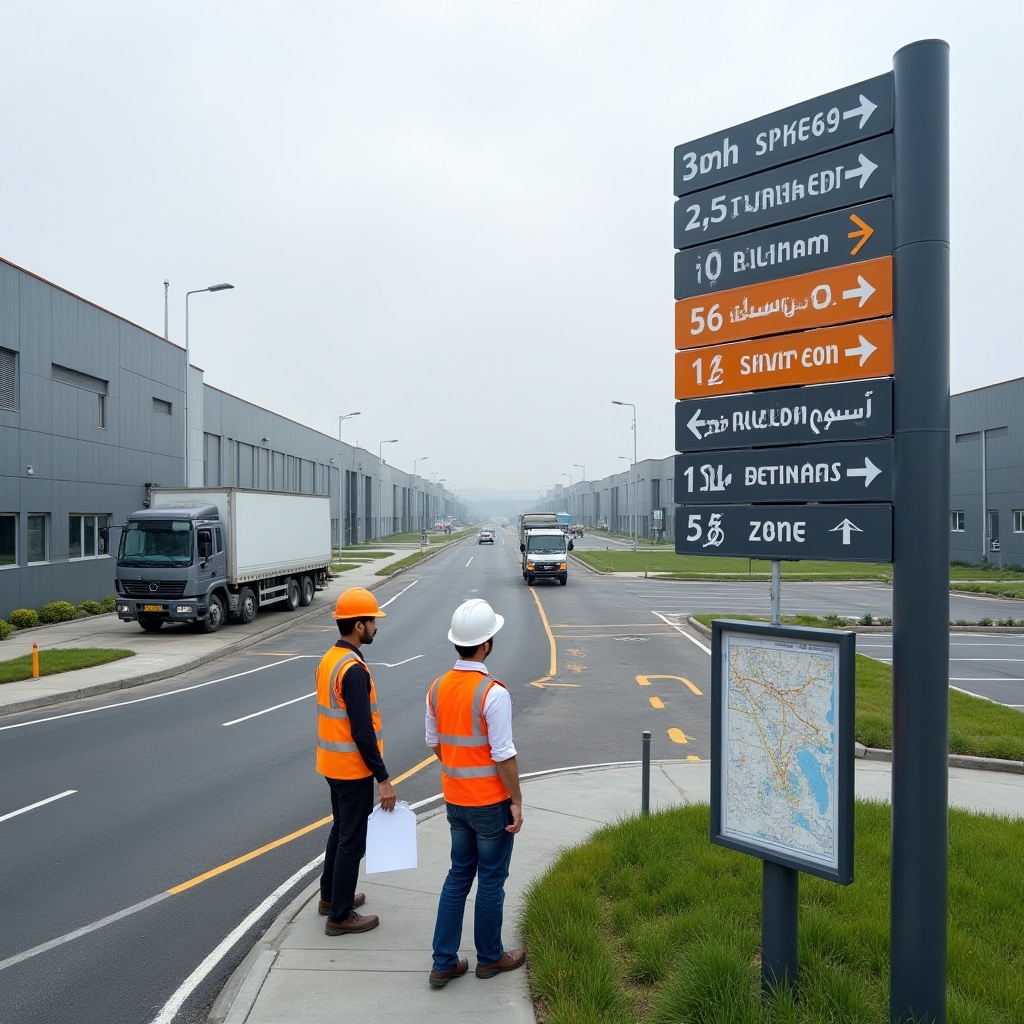
The campus comprised eight production buildings, multiple warehouses, and administrative facilities across forty hectares. Navigation challenges included separate vehicle and pedestrian circulation systems, safety zone demarcation requirements, and multilingual needs for diverse workforce demographics.

Advisory Approach

Our analysis revealed distinct navigation needs for delivery drivers, employees, and visitors. We recommended separate but coordinated signage systems—large-format vehicle directional signs at key intersections, pedestrian wayfinding incorporating safety information, and building identification visible from both vehicle and pedestrian perspectives. Color coding distinguished production zones while maintaining safety compliance.

Implementation Outcomes

The dual-system approach reduced delivery confusion and improved logistics efficiency. Safety-integrated wayfinding decreased unauthorized zone entries. Multilingual signage in five languages served the international workforce while maintaining visual clarity through consistent iconography.

Industrial park with large format directional signage showing vehicle routes and pedestrian pathways with safety zone markings

University Campus Expansion

Integrating new facilities into existing campus wayfinding while respecting architectural heritage.

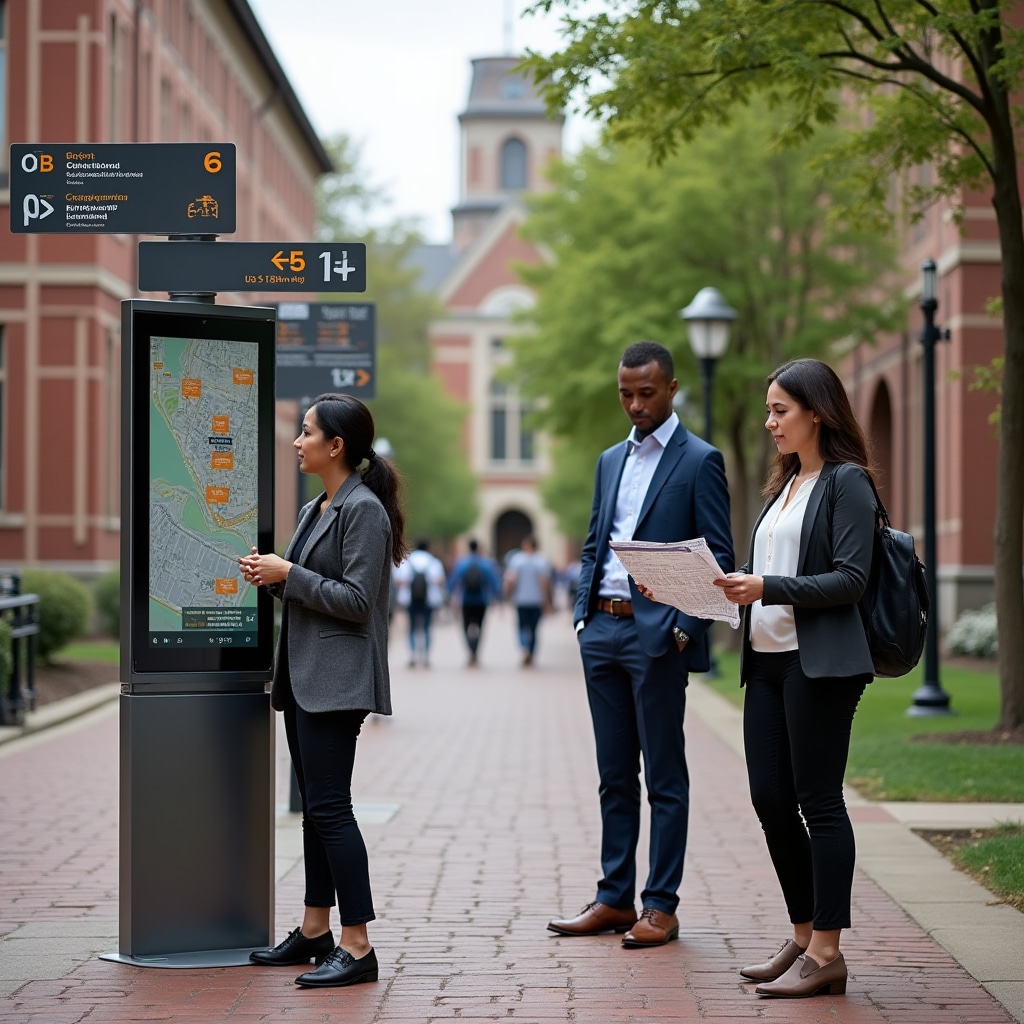
University campus with modern wayfinding kiosks showing building locations and walking paths integrated with historic architecture

Challenge Context

Campus expansion added five new buildings to a historic core established over decades. The challenge involved integrating contemporary facilities into existing navigation patterns while maintaining visual harmony with traditional architecture. Student populations included significant international enrollment requiring multilingual support.

Advisory Approach

We analyzed pedestrian flow patterns between academic buildings, identifying natural circulation paths and key decision points. Our framework balanced modern wayfinding clarity with materials and forms respectful of campus character. Building numbering extended the existing system logically while new naming conventions aligned with campus traditions. Multilingual signage prioritized languages reflecting actual student demographics.

Implementation Outcomes

The cohesive system unified old and new campus areas without visual disruption. Strategic placement of campus maps at major pedestrian intersections reduced wayfinding confusion during orientation periods. Digital wayfinding kiosks complemented physical signage, providing detailed indoor navigation and accessibility information.

Common Advisory Elements

These projects demonstrate recurring principles in our wayfinding approach.

Evidence-Based Analysis

Each project began with thorough observation and user research rather than assumptions about navigation needs. Understanding actual behavior informed all recommendations.

Flexible Frameworks

Systems designed for adaptation rather than permanence. Modular approaches allowed organizations to update information without complete system replacement.

Context Sensitivity

Visual solutions respected architectural character and organizational culture while maintaining functional clarity. Effective wayfinding enhances rather than conflicts with environment.

Inclusive Design

Multilingual considerations, accessibility compliance, and universal design principles ensured systems served diverse user populations effectively.

Your Navigation Challenge

Every facility presents unique wayfinding requirements shaped by architecture, user populations, and operational context. These case studies demonstrate our approach to understanding specific challenges and developing tailored solutions.

Whether addressing visitor confusion in office complexes, safety integration in industrial settings, or campus-wide navigation systems, our advisory process begins with thorough analysis and delivers strategic frameworks that improve navigation experiences.

Discuss Your Project